

How to Move Beyond the DEI Statement
If Nothing Has Changed Since the Statement, Here’s What to Do Next

We’ve all seen it. A company makes a bold statement about its commitment to diversity and inclusion. It may come after a public event, internal pressure, or in response to industry expectations. The language is strong. The intent seems clear.
Then months pass and nothing changes.
The hiring data stays the same. The leadership team still lacks representation. Employees from underrepresented groups are still carrying the weight of inclusion without real support.
This is not a new problem, and in 2025, it still has not gone away.
Leaders continue to ask how they will know if they are doing the right thing, but the follow-through often stops at the question. Without a strategy to back up the message, the work stalls. Without clearly defined values, measurable goals, and decision-making authority, even the most well-meaning diversity efforts lose momentum.
That is why I wrote Unbias: Addressing Unconscious Bias at Work.
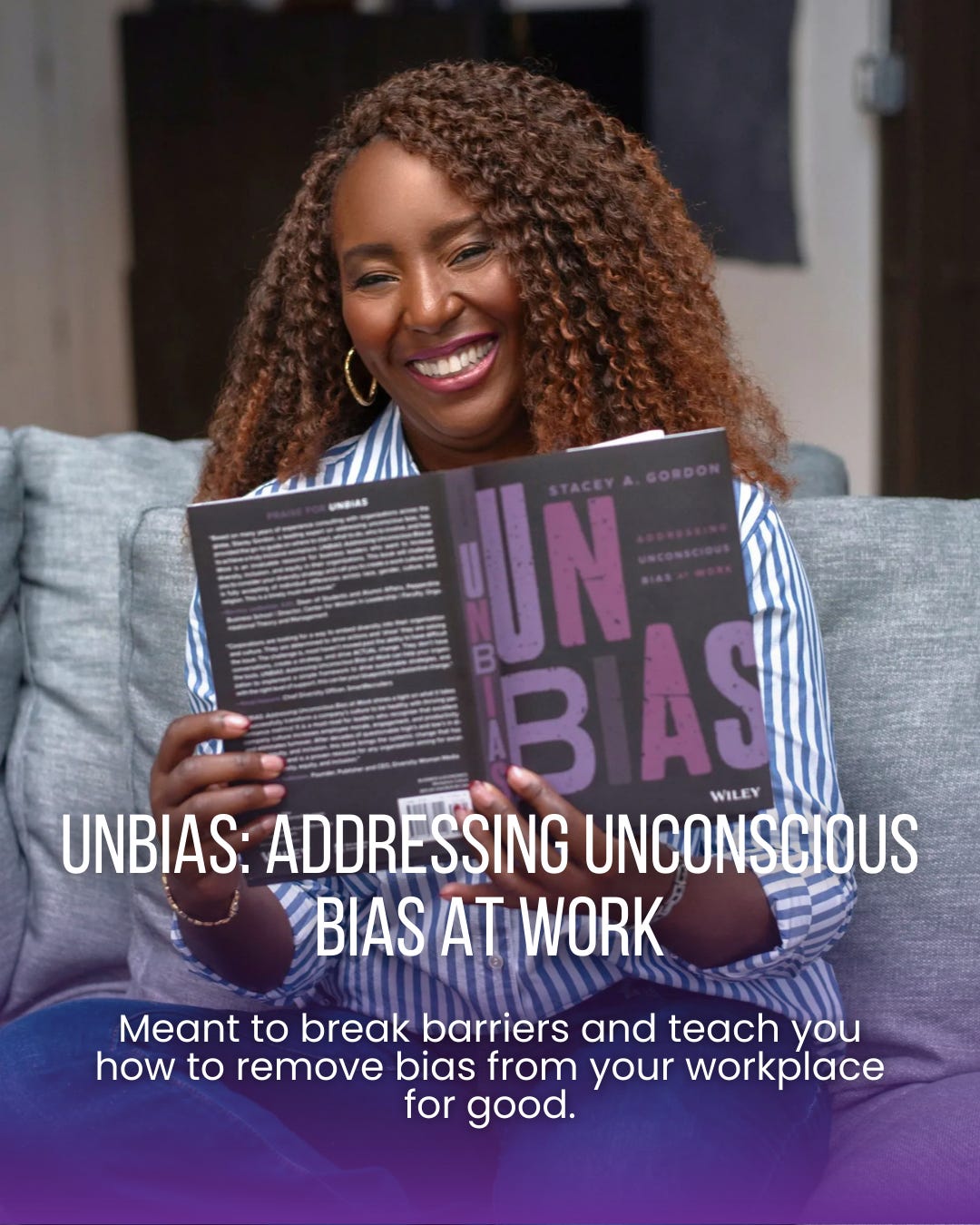
It is built from the exact strategy I use with my clients. It is a strategy that removes bias from hiring, evaluation, and promotion systems and gives organizations a way to measure progress with clarity. It focuses on aligning your diversity goals with your core values and holding leaders accountable for making inclusion part of how business gets done every day.
Across industries, company sizes, and cultures, I have seen the same patterns emerge. And I have also seen what works. The blueprint I share in Unbias is designed to help leaders close the gap between what they say and what they actually do.
If your organization is serious about removing barriers, reducing bias, and creating a workplace that lives up to its values, this is the place to start.
P.S. Unbias: Addressing Unconscious Bias at Work is available now. You can grab your copy Unbias here. Use it as a guide to move from intent to impact, so your next statement reflects progress, not promises.